
Start with what you want to do together.
Before choosing a month, picture a full retreat day. Will the main work happen in a covered practice space? Are you planning daily beach sessions or several excursions? How much flexibility can you leave in the schedule? A retreat built around movement, conversation, and shared meals asks different things of the weather than one centered on outdoor adventures. Consider your guests’ calendars alongside the climate. A promising weather window is only useful if your community can take the time to come.
Understand the broad seasonal pattern.
Costa Rica’s official tourism guidance describes the Pacific’s dry season broadly as December through April and its green season as May through November. These are planning patterns, not a daily forecast, and conditions vary by location. Uvita belongs to the country’s wetter South Pacific region. Do not promise a rain-free stay in the dry season or assume that green-season rain will arrive at a predictable hour. Choose dates with an understanding of the season, then build a program that can respond to the weather you actually get.
Give an outdoor program some breathing room.
If the beach, a boat outing, or a waterfall is central to your retreat, speak with the relevant local operator before making a fixed promise to guests. Find out how conditions affect the activity and what flexibility is possible. Leave a spare window rather than placing your one essential outing immediately before departure. A covered practice or an unhurried meal should still feel like a good part of the retreat if outdoor plans change. Check any extra transport or rescheduling costs when you build the budget.
Let green season be part of the experience.
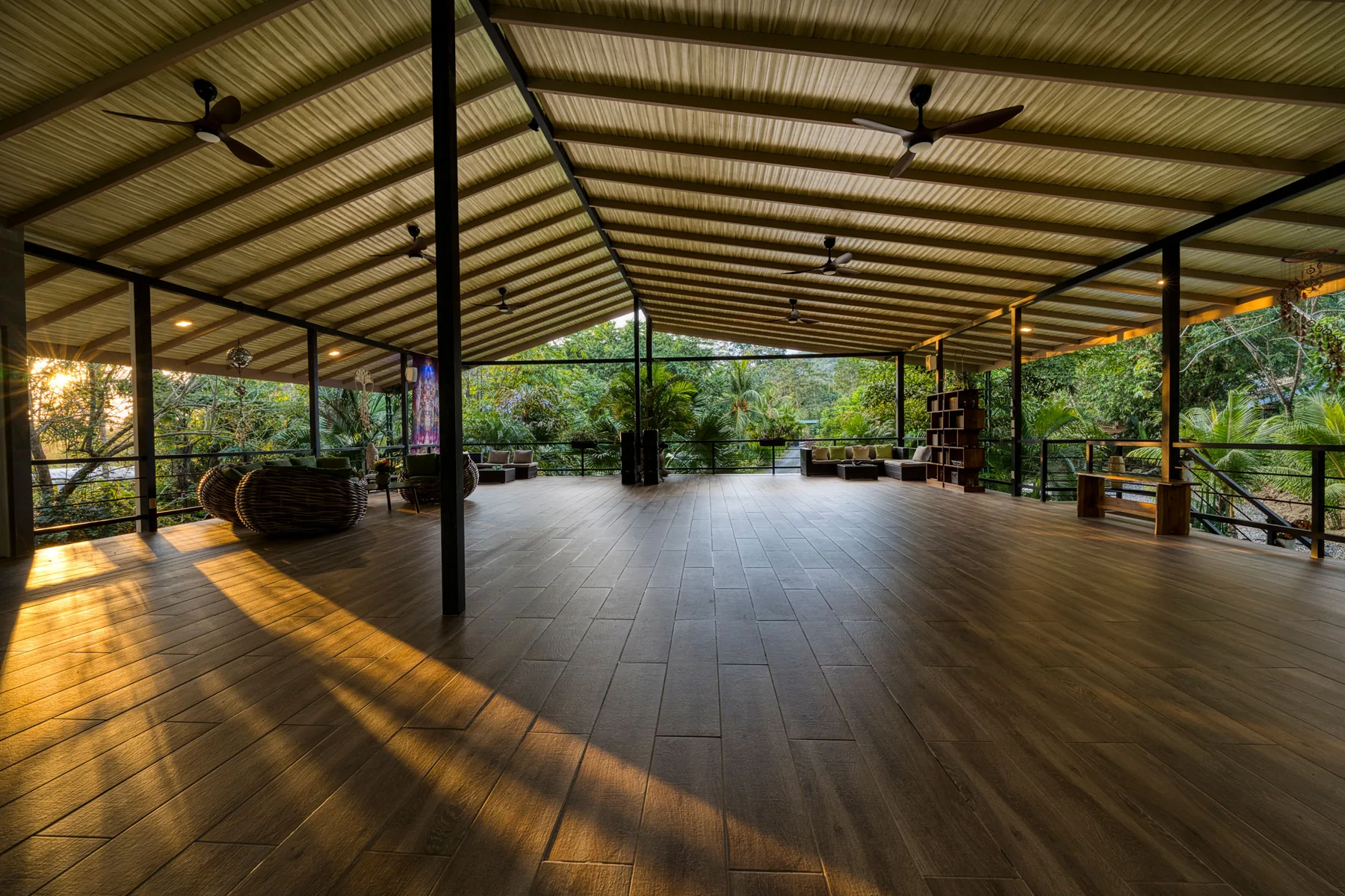
Rain on the roof can suit a writing session or a quiet practice beautifully. It can also change a trail or river outing, so the appeal of a greener landscape belongs alongside practical flexibility. At Synergy, the covered Yoga Chalet gives your program a place to gather when conditions outside are less inviting. Plan the rainy-day version with the same care as the sunny one: a workshop you look forward to, time for individual work, and meals that are allowed to take their time. It should still feel like the retreat people chose.
Check the whole calendar.
Look at public holidays, school calendars, your community’s work commitments, and the travel options around your preferred dates. Ask for availability and a quote rather than assuming one season will always be cheaper. If a wildlife outing matters to the group, verify its timing and practical arrangements directly with an operator. Keep the arrival and departure days realistic, too. The best date on a calendar can lose its appeal if everyone has to make an awkward flight connection or hurry away from the closing gathering.
Tell guests what to expect.
Once dates are chosen, explain the seasonal setting in the invitation and give useful packing guidance before arrival. Describe which activities are central and which depend on conditions. Light rain protection, suitable footwear, and a plan for keeping personal items dry may matter more than another outfit. Above all, show guests that the retreat has been thought through. There is no single perfect month for every group. There is a set of dates that works for your people, with enough care in the planning to make the stay feel well held.