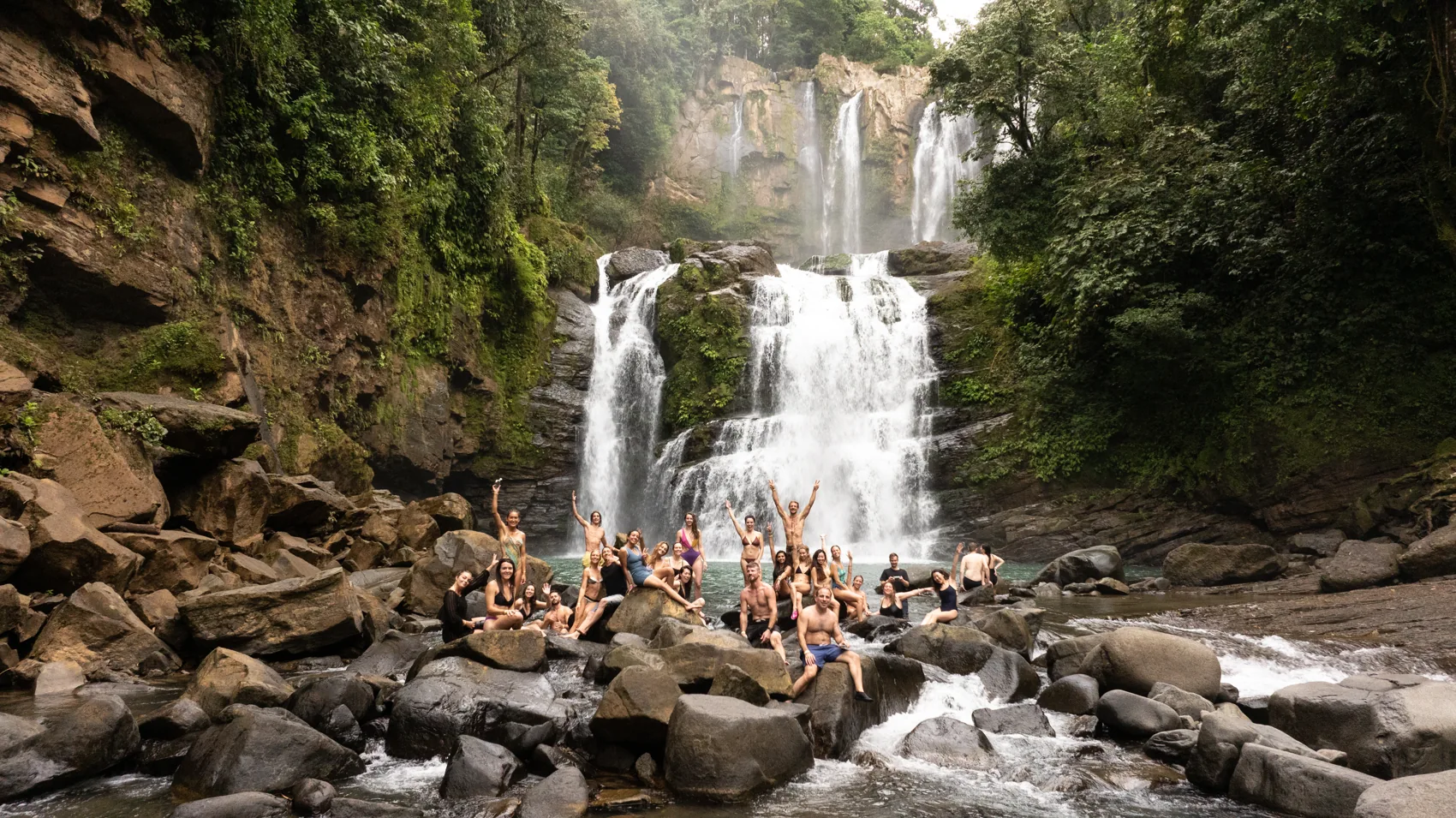

Expect variety, not a fixed forecast
The southern Pacific’s wetter period generally runs from May into November. Some days offer bright mornings followed by afternoon rain; others stay wet for longer. September and October are often especially rainy. Think of these as broad patterns rather than a timetable. The weather can shift from one week to the next, and that flexibility belongs in the way you plan the trip.
Put the important outing first
If a boat trip, beach walk or waterfall visit matters to you, give it an early place in the stay and leave a spare window. Check conditions locally before going. Heavy rain can affect roads, river levels and sea conditions, so a change of plan can be the sensible choice even when the sky at your room looks clear.
Bring clothes that keep up
Pack light layers that dry easily, rain protection and a way to keep your phone and documents dry. Sun protection still matters when a day begins brightly. Choose footwear for the activities you will actually do, and follow local advice on trail and water conditions. You do not need an expedition’s worth of equipment, but a few well-chosen things make a wet afternoon much more comfortable.
Make the slower hours part of the trip
Rain can make a covered terrace, a long lunch or a quiet practice feel like exactly where you should be. At Synergy, the Yoga Chalet offers a covered space for your own practice between outings. Leave a book open, let dinner take its time and avoid measuring every day by how many places you reached. A green-season visit rewards a little patience. Come with a few things you would love to do and enough openness to enjoy the day you actually get.
Choose the stay for the hours you spend there
During a wetter trip, the quality of your base becomes part of the itinerary. Think about where you will eat, read, talk, and practice when you are not out exploring. A covered gathering space and a comfortable room matter more than a list of distant attractions.
For hosted retreats at Synergy, the meal plan and covered Yoga Chalet make it easier to keep the group’s daily rhythm in one place. Whole-property stays give your group the space, with your own arrangements for meals and activities. Individual room guests should choose the room and dates that suit their own plans rather than expecting a scheduled retreat program.
Plan the arrival with the same flexibility
Leave generous time between your international arrival and the final leg to Uvita. Whether you come by road or connect to a regional flight, avoid a plan that needs every stage to run perfectly. Ask your transport provider about conditions close to departure and keep their contact details somewhere accessible offline.
If you are hosting, send one practical arrival note rather than a stream of updates in different places. Include the agreed meeting point, what to do after a delay, and the number guests should contact. A little clarity before travel helps people settle into the slower pace they came for.